

Previous Deep Dives
WRN Deep Dive: Fighting breast cancer doesn’t stop when treatment ends
October is Breast Cancer Awareness Month. WRN’s Sean Maloney talks with UW Health medical oncologist Dr. Kim Dittus about survivorship, and how fighting breast cancer doesn’t stop when treatment ends…
WRN Deep Dive: DATCP Secretary Randy Romanski on diesel, tariffs, farmer wellness and export success
Wisconsin farmers have a lot to deal with this harvest season. That includes record diesel prices averaging over $6.00 a gallon. Secretary of the Department of Agriculture, Trade and Consumer Protection Randy Romanski said “farmers are feeling the impacts on their bottom line.” Romanski, interviewed during World Dairy Expo in Madison, said tariffs and retaliatory tariffs are depriving farmers of certainty when they need it most. “That uncertainty can have an impact on markets as well. So in Wisconsin, we try to do everything we can to create relationships with our businesses, but those trade variabilities are really a challenge right now with the decisions coming out of Washington, DC.”
The Wisconsin Farm Center can provide help for farmers who may be feeling stressed. “Farmers are able to receive 24/7 counseling with professionals that understand agriculture through the Farmer Wellness Program. And the use of the service continues to rise,” Romanski explained.
And Wisconsin continues to “punch above its weight” in export markets “Wisconsin just moved into the top ten in the exports of ag, food and forestry products. And this at a time where we’re seeing all this disruption in international markets because of trade policies” Romanski said the Wisconsin Initiative on Ag Exports, initiated by Governor Tony Evers in his first term provides state funding to help ag and forestry producers find export markets.
WRN Deep Dive: Historic Zoo steam locomotives reunited in The Dells
A railroad reunion in the Dells. Three steam locomotives that operated at the Milwaukee County Zoo will be in action at the Riverside and Great Northern Railway in the Dells, where the engines were built.
“This is real railroad equipment,” explained the railway museum’s Jim Schulz. “They (the Sandley Light Railway Equipment Works) used plans from the CNNW and just scaled it down to about 1/3 the size of the big trains from back in the day to operate on 15-inch gauge track.”
The Dells railway acquired the oldest engine in 1990, with the other two arriving at the museum in 2024 when the zoo train switched to diesel power.“For the first time ever, the 82, the 1916, and the 1924 will all be operating at the same time at our railway,” said Schulz. “So we think that’s pretty special. The place where they were built, they’re going to operate and pull trains all day long.”
The first two weekends in October is our pumpkin train season with these engines in service. And so the kids get a free pumpkin with a train ride. There’s beautiful fall colors and the Dell scenery and three authentic steam locomotives.”
WRN Deep Dive: Trump Administration wants to rescind Roadless Rule in National Forests
The Trump administration plans to rescind the decades old Roadless Rule in National Forests, to decrease wildfire risks. Elizabeth Ward with Wisconsin’s John Muir Sierra Club Chapter says the rule was the subject of extensive public input prior to enactment in 2001.
Unfortunately, we have a lot less than that. So the USDA has opened a comment period that closes in mid-September. So people can comment on their website where they announced the plans to rescind the roadless rule. And that shortened comment period and lack of public hearings means more people have to go and comment than there was in getting the rule in the first place.
Michael Dombeck is a Wisconsin native, and UW Stevens Point alumnus. Dombeck was directly involved in developing the roadless rule while leading the U.S. Forest Service. He doubts rescinding it will have much effect in decreasing wildfires.
“All the data and the information, even the Forest Service’s own data published by their researchers do not support that. In fact, the fact is that most of the fire starts are human caused, some 80%. And of those fires that are ignited, about 97% are put out in initial attack. But those that get away the 2 to 3% that get away are almost always under very extreme weather conditions with high winds, very low humidities, and are literally explosive in nature and become very intense. The bottom line is the more people you have using an area in very dry conditions by increasing human activity in these areas, the data shows we’re going to see an increase in fire starts.”
UW Stevens Point Assistant Professor in Forest Ecology, Michael Tiller says while there may be some upside to allowing temporary roads, he also echoes Dombeck’s concerns.
So you run a kind of a double-edged sword, if you will, because the more people you get in there, the more opportunity you’re gonna get for basically starting fires.”
There are some 69,000 roadless acres representing less than 5 percent of Wisconsin’s Chequamegon-Nicollet National Forest. That may sound like a lot, but Sierra Club’s Ward notes that is just a fraction of the forest’s 1.5 million acres.
And it’s this tiny amount of our vast forest that has this kind of wild nature to it.
Public comments on rescinding the roadless rule must be received by midnight on September 21. To comment on the proposed rule and draft environmental impact statement, go to Regulations.gov. More information is available on the Forest Service Roadless Areas webpage.
WATCH WRN Deep Dive: Following up on latest MU Poll with UW La Crosse political scientist
In the race for Wisconsin Governor, a newly released Marquette University Law School Poll finds Democrat, Milwaukee County Executive David Crowley leading Republican 7th District Congressman Tom Tiffany among likely voters by 49% to 44%, with 7% undecided. The candidates are tied among all registered voters at 44% each, with 12% undecided.
WRN’s Bob Hague spoke with University of Wisconsin La Crosse political scientist Anthony Chergosky about the poll results and governor’s race, as well races for attorney general and the Wisconsin Legislature.
Noting that statewide elections in Wisconsin are normally closely contested, Chergosky says the MU Poll found more voters had strong opinions on Tiffany.
“One thing that stood out to me is that a sizable chunk of the electorate does not have an opinion either way on David Crowley. They don’t know enough about him to make an assessment positive or negative. Tom Tiffany is much more well-defined in the minds of voters in the sense that much more voters have either a positive or negative view of him.”
AI data centers promise to be a significant issue in the campaign, Chergosky notes poll respondents favor some type of statewide moratorium on new data center developments,
“We saw a strong majority of registered voters say that they would support the one-year moratorium proposal that really helped Francesca Hong gain so much traction in the Democratic Party primary. But neither Crowley nor Tiffany is calling for that type of moratorium, even though it seems many voters would be receptive to it. The debate between Crowley and Tiffany has been about taxes. It has been about local control. It has been about the ways that Crowley supporters and unions might benefit from construction of data centers. Tiffany has tied data center issues torural Wisconsin and farmland saying that data centers would pose a threat to our rural communities and a threat to farmland.”
Congressman Tiffany earned the early endorsement of President Donald Trump, while Wisconsin Governor Tony Evers encouraged Crowley to reenter the race after he’d earlier dropped out, then endorsed him in the Democratic primary in which he narrowly defeated Madison state Representative Francesca Hong.
“I think those linkages matter a lot because for David Crowley, he is understandably viewed as the candidate of Governor Tony Evers, whose endorsement was pivotal in helping Crowley win the nomination. Meanwhile, in Congress, we have seen that Tom Tiffany is an outspoken supporter of Donald Trump. And the Marquette poll shows that many Wisconsin voters do view Tiffany as being part of the MAGA movement. So that means that Tiffany and Trump are kind of connected just as Crowley and Evers are connected.”
The first and perhaps only debate between Tiffany and Crowley by the Wisconsin Broadcasters Association is scheduled for October 9th.
“I think debates matter because they are a ritual of democracy where the candidates are face to face confronting one another. I also think it’s valuable to have candidates defend themselves and articulate their positions in an unscripted manner where on the campaign trail they might be reading a speech or they might have memorized their speech and in TV ads of course those are highly scripted and crafted by expert consultants. So I think there’s something to be said for debates in the sense of demanding that candidates can communicate what they stand for in an unscripted format.”
Chergosky says its possible that the WBA debate will be the only opportunity for voters to see the candidates square off face to face.
WRN Deep Dive: Marquette professor on exploding U.S. debt
How worried should we be about the nation’s mind-boggling deficit? The news dropped last week — the US national debt topped a record $40 trillion. Marquette University’s Dr. Margaret Hughes-Morgan says tariff refunds and maturing older debt have contributed to the exploding deficit.
“These tariffs were ruled to be unconstitutional, and so they’ve had to pay that. But the other thing that made it explode very quickly is aging debt. When older debt matures, you get exploding interest payments. The biggest payment for the United States is the interest rate on the deficit. The other thing that’s happening is that the entitlement programs have expanded.”
Defaulting on the debt is unlikely — Hughes-Morgan notes Congress will again raise the debt ceiling to prevent that from happening.
“So this, I don’t think, is something that Americans really need to panic about. I mean, obviously it would be better if we did not have all of this debt.”
Hughes-Morgan says Congress reducing the debt in any meaningful way is also unlikely.
“Because the amount of cuts that they would have to make would be tremendous, and that would impact households. Taxes would have to go up, and any kind of entitlement program would have to be cut dramatically in order to address the amount of debt that we’ve gotten ourselves into.”
Hughes-Morgan is a professor in the Management department at Marquette.
WRN Deep Dive: Honoring “Mr O” at Luxemburg-Casco schools
Not far from Green Bay with its Vince Lombardi Avenue and Bart Starr Bridge, Luxemburg-Casco schools are bestowing a similar honor. Athletic Director Jenny Bandow says the late Steve Okoniewski’s six-year career as an NFL defensive lineman, including a season in Green Bay, was just one facet of the man known as “Mr. O.”
“He knew when to be tough, but he also knew, when he had to soften it up a little bit, right? But he was so effective in what he did and just touched so many people, staff, kids, community members, coaches,” Bandow told WRN.
“Mr. O” served as high school principal for 25 years until his 2014 retirement. Bandow says they’d been thinking of ways to honor Okoniewski since his death in 2024.
“Someone had come up with the idea of there’s a road right behind our school that it’s actually called School Road. Why not name the road after him? And I was like, that’s a really great idea,” Bandow said.
Signage designating Okoniewski Way goes up in time for the new school year and Luxumburg-Casco’s home football opener with Kewaskum.
WRN Deep Dive: No Helmets, No Seatbelts top factors in fatal ATV/UTV crashes so far in 2026
Wisconsin Department of Natural Resources (DNR) statistics show the lack of wearing helmets and using seatbelts are the primary causes of the 29 fatal ATV/UTV incidents so far in 2026. Wisconsin leads the nation in fatal ATV/UTV incidents.
A third major factor in fatal crashes is the lack of completing a safety education course. “This is a troubling trend,” said Lt. Jacob Holsclaw, DNR off-highway vehicle administrator. “Completing safety education and utilizing helmets and seatbelts are simple ways to protect yourself and passengers while out riding. Not all crashes are 100% preventable, but the odds of surviving a crash drastically increase when safety equipment is properly worn.”
DNR records show 13 of the 29 fatal incidents in 2026 involved ATVs and 16 involved UTVs. The top three types of fatal crashes were rollovers (15), collision with a motor vehicle (6) and ejections from the machine (4). There also have been 49 self-reported nonfatal ATV/UTV crashes.
There also have been 49 self-reported nonfatal ATV/UTV crashes.
Keep these safety tips in mind:
- Always ride sober, with zero alcohol or substances.
- Wear helmets, seatbelts and eye protection even when loading and unloading machines.
- Follow all regulatory signs, speed limits and come to a complete stop at all stop signs.
- While on routes, operate with lights on, on extreme right-hand side of the traffic lane and at safe speeds.
- Take a safety class regardless of age requirements.
“Many of the crashes could be prevented simply by adopting a safety code of conduct,” Lt. Holsclaw said. “Ride sober and reasonably, avoid risky behavior and always ride with proper safety attire and education.”
Wisconsin law requires every operator involved in a crash incident to report the incident without delay to law enforcement officials. In addition, within 10 days of the incident, the operator must submit a written report on Form 4100-174 to the DNR.
Learn more about ATV/UTV riding, regulations and safety classes on the DNR’s website.
Watch WRN Deep Dive: Got Flock? The license plate readers carry privacy concerns
While law enforcement agencies tout the technology for solving crimes, installation of Flock license plate readers plate readers pose a growing privacy concern for many in Wisconsin and across the nation.
UW Madison instructor Dorthea Salo suggests we think of Flock cameras as if they’re people. “So you have people stationed in various places around the city, around the state, taking notes on every single car that passes by.” Salo says privacy concerns extend far beyond vehicle license plates, make and model “This adds up into a giant database of who was where when. It’s not just that they can place you in a particular place at a particular time. They can build up a dossier of your movements over time.”
While some communities in Wisconsin and elsewhere have cancelled Flock contracts after public opposition, Salo that doesn’t mean similar tech can’t be deployed. “A lot of the places that have canceled Flock contracts are actually looking to replace them with different systems.”
UW Madison and communities in Dane County and the Fox Valley are among those that have stepped away from Flock in recent months.
WRN Deep Dive: Enjoy some Gilbert and Sullivan with a twist: It’s The McAdo at the Bartell Theatre
Reporter Raymond Neupert talks about The McAdo, a Scottish retelling of the Gilbert and Sullivan classic The Mikado, with Stage Director Sam White. Tickets on sale now at http://www.bartelltheatre.org.
WRN Deep Dive: AirVenture is over, but EAA remains committed to the future of aviation year-round
Reporter Raymond Neupert talks with Experimental Aircraft Association spokesman Dick Knapinski about the recently ended AirVenture and what the airshow and the organization represent for the future of air travel and aviation.
WRN Deep Dive: Safe gun storage can prevent tragedy
Normalizing conversations about safe gun storage means more than just keeping firearms out of the wrong hands. It’s a relevant topic as the father of Madison’s Abundant Life School shooter is scheduled for trial next year for failing to secure the firearms used. Rose Mackenzie, a Program Coordinator at the Children’s Wisconsin Safety Center, says gun injuries are the leading cause of death for children and teens in the United States, as well as in Wisconsin.
“True secure storage means using a locked container, a gun safe, lock box, or a cabinet with a key or a combination,” Mackenzie says. “Ammunition should also be stored separately and also locked up. Keys and combinations should be kept out of reach and out of sight.”
In addition to safely storing firearms at home, think about homes your child might visit. “It’s reasonable and important to ask, do you have a firearm in your home and are they secured? This shouldn’t be made out as like an accusation, but it should be like the same instinct or response to asking about allergies or the pool.”
Trigger locks, lock boxes and safes can keep kids safe, as well as storing guns and ammo separately. You can find resources for home gun safety on the Children’s Wisconsin website.
On average, 73 Wisconsin children and teens die by gun homicides and suicides each year, with Black and Hispanic children disproportionately affected.
WRN Deep Dive: A Democratic Party State Convention and Governor Race Preview
WRN’s Sean Maloney chats with UW – La Crosse Political Science Professor Anthony Chergosky about the upcoming Democratic Party State Convention, as well as the Democratic race for governor.
WRN Deep Dive: EMS F.O.R.W.A.R.D designed to help communities evaluate and improve Emergency Medical Services
Rural Emergency Medical Services in Wisconsin face unprecedented challenges. James Small is EMS Outreach Program Manager with the Wisconsin Office of Rural Health. “One of the things we’ve demonstrated is that between 40 and 50% of our ambulance services aren’t able to respond to a call 24-7, 365 as required to. I think that’s something that’s been well documented at this point based on our research at the Office of Rural Health and has been talked about a lot in the media.”
Issues impacting rural EMS include funding, along with staff retention and mental health. The Office of Rural Health has developed EMS F.O.R.W.A.R.D. to strengthen EMS reliability, sustainability, and resilience through coordinated, long term system improvement.
WRN Deep Dive: Explaining the hack; how student data company Canvas was compromised with Wisconsin Consumer Protection
Reporter Raymond Neupert talks with Wisconsin Consumer Protection Director Mike Domke about the recent hack at student and school service provider Canvas, how to protect your kids, and what companies should learn from the incident.
WRN Deep Dive: Pope Leo XIV warns of “dehumanization” possible with advances in AI, says Madison bishop
Reporter Raymond Neupert discusses the newly released Magnifica Humanitas, Pope Leo XIV’s encyclical on emerging technologies and the church’s place in safeguarding the “human person” with Madison Bishop Donald Hying.
WRN Deep Dive: Community Maps provide traffic safety resources for Wisconsin
An online resource can help increase road safety in Wisconsin communities. Andi Bill is Associate Director of the Traffic Operations and Safety Laboratory at UW Madison, which produces Community Maps. In an interview with WRN, Bill explained that the site includes a lot of data and other traffic safety resources. “But the main purpose is to get the data into the hands of anybody and everybody that’s interested in trying to make our streets and our roads safer for everybody driving, walking, and biking on our roads.”
Community Maps track all police reported motor vehicle crashes from 2010 to the current year. Fatal crashes are included from 2001. Crashes are updated on a nightly basis. You can access the maps and a host of other information at transportal.cee.wisc.edu
“I will have citizens call me up and say, ‘my intersection is really dangerous and this is what I’m feeling. Can you take a look at it?'” Bill said. And so we pull up community maps together. I’m able to look at all of the crash data around that going back all the way to 2001. And then we’re able to then say, okay, what are we seeing here?” The maps provide law enforcement agencies and county Traffic Safety Commissions with a statewide map of all police reported motor vehicle crashes.
WRN Deep Dive: Wisconsin Veterans Museum Celebrating Its 125th Year
The Wisconsin Veterans Museum, located on the Capitol Square in Madison, is celebrating its 125th year. WRN’s Bob Hague sat down with museum director Chris Kolakowski to talk about the museum’s long history.
WRN Deep Dive: Keep Wild Animals Wild This Spring
Animals across Wisconsin, especially younger animals, are becoming more active this time of year. WRN’s Sean Maloney chats with Department of Natural Resources’ captive wildlife health specialist Jenna Fastner about why it’s important to keep your distance from these animals.
WRN Deep Dive: Three Months Since Launching, Wisconsin’s New Film Office Is Just Getting Started
Wisconsin’s new Film Office launched at the beginning of the year. WRN’s Sean Maloney talked with its director Veronica Pope about how the film office and tax incentives will help Wisconsin, what makes the state a great place to shoot, and much more.
WRN Deep Dive: Celebrating Wisconsin’s Ag Industry on National Agriculture Day
Tuesday, March 24th, is National Ag Day, observed annually to recognize the role farmers and agribusinesses play in providing food, fuel and fiber across the country. WRN’s Sean Maloney talked with Wisconsin Department of Ag, Trade and Consumer Protection Secretary Randy Romanski about all things Wisconsin ag, including what challenges faces local producers, avian influenza, and things that have Romanski excited about the future of the Dairy State’s ag industry.
Thoughts from UW-Madison sleep expert during Sleep Awareness Month
Wisconsin Radio Network morning news anchor and reporter Ted Ehlen talked with the assistant director of the Institute of Sleep and Consciousness at UW-Madison, Stephanie Jones, about such topics as what a good night’s sleep is comprised of, the health benefits of deep sleep, how such wearables as aura rings and Apple watches have made people unduly concerned about their sleep quality, and how dreaming and napping affect our sleep wellness.
WRN Deep Dive: Celebrating Wisconsin’s Ag Industry on National Ag Day
Tuesday, March 24th, is National Ag Day, observed annually to recognize the role farmers and agribusinesses play in providing food, fuel and fiber across the country. WRN’s Sean Maloney talked with Wisconsin Department of Ag, Trade and Consumer Protection Secretary Randy Romanski about all things Wisconsin ag, including what challenges faces local producers, avian influenza, and things that have Romanski excited about the future of the Dairy State’s ag industry.
Pre-spring gardening tips with UW-Extension Horticulture Outreach Specialist Bruce Spangenberg
Wisconsin Radio Network morning news anchor and reporter Ted Ehlen recently talked with UW-Extension Horticulture Outreach Specialist Bruce Spangenberg about what to do in preparation for the beginning of spring planting and gardening, and what can be done today to get a jump on it. You can get practical advice about all things horticultural here.
Focusing On the Irish in Wisconsin on St. Patrick’s Day
Wisconsin Radio Network morning anchor and reporter Ted Ehlen talked with Marquette University Associate Professor of Modern Irish and British Empire History Timothy McMahon about the migration of the Irish to Wisconsin, how the Irish have influenced and contributed to the culture of the Badger State, the challenges Irish immigrants met up with on their way to full acceptance as Americans, and how all those topics led to the American tradition of celebrating St. Patrick’s Day.
WRN Deep Dive: Rotunda display brings attention to Car Crash Tragedies
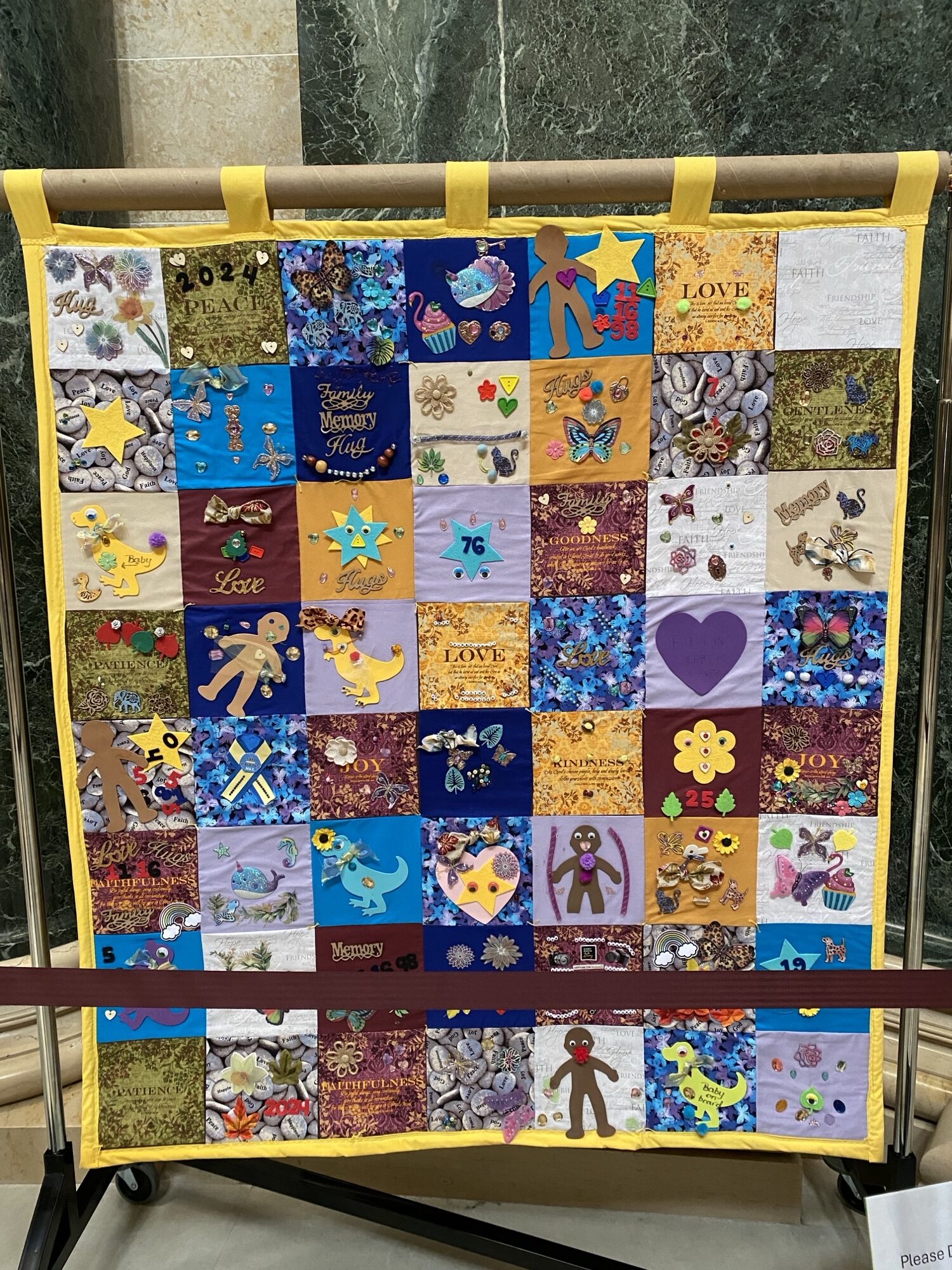 Bringing attention to preventable car crash tragedies, a display in the Capitol rotunda in Madison this month tells the stories of just three of the 240 victims over a three-year period in Milwaukee. Jessica Wineberg is the city’s Vision Zero policy director. “It happens to 500 families in Wisconsin approximately every year,” Wineberg said. “We hope that by connecting with these stories, people remember that they can take some personal action and politically we can take action to have safer roads.”
The display highlights just some of the crashes that took the lives of Milwaukee residents, as initially reported by the weekly Shepard Express last November.
Wineberg explained Vision Zero, a multinational effort to reduce the tragic trend of deaths. “Vision Zero is the goal of zero traffic deaths on our roadways, and it really is an ethical idea that is the only acceptable goal, and everyone involved with transportation should be working together.”
LISTEN – Milwaukee Vision Zero Director Jessica Wineberg:
While there’s a role for traffic engineers and law enforcement, much of the responsibility rests with drivers. “It’s not that you have to do something super difficult as an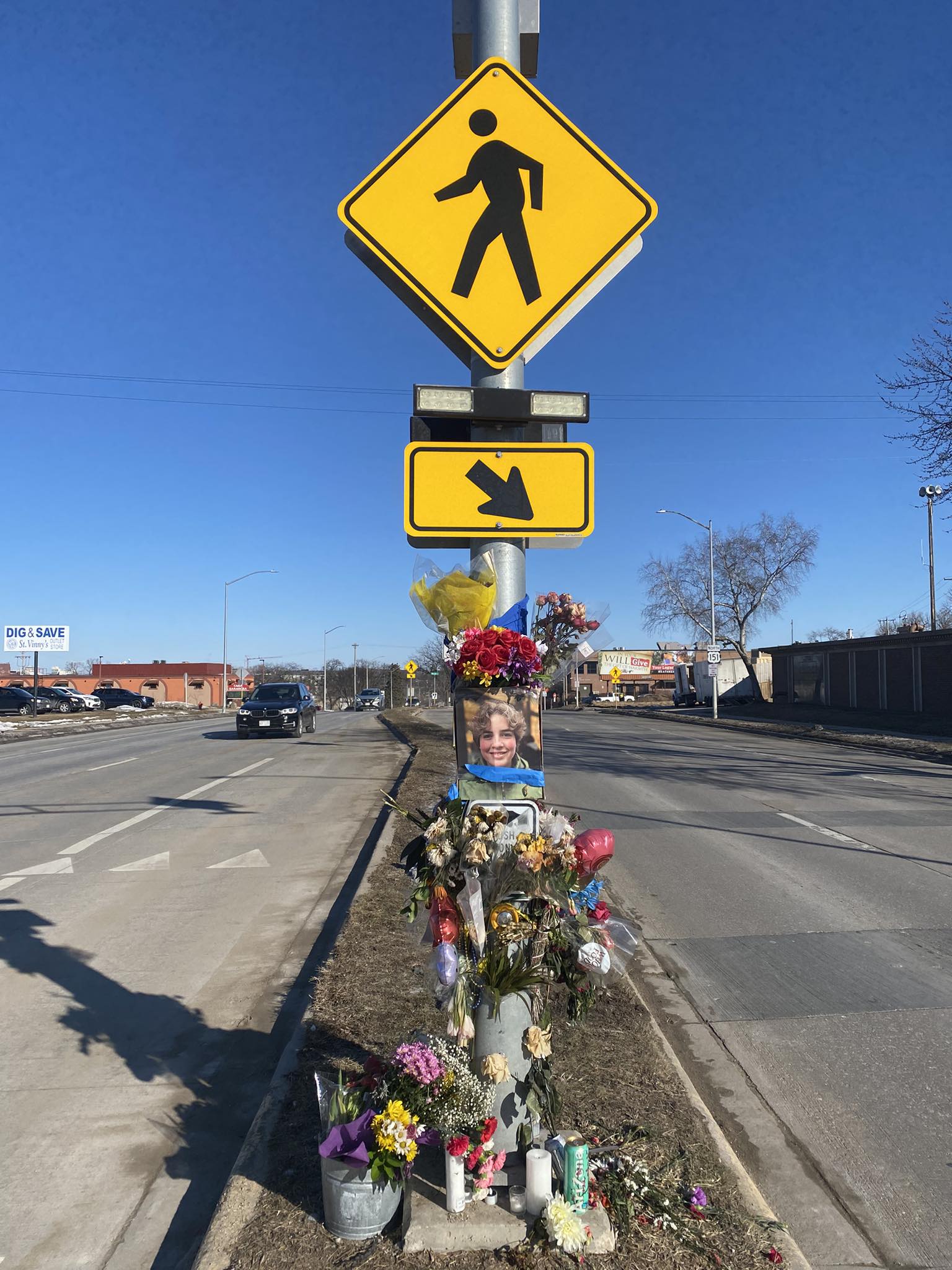 individual,” Wineberg said. “You need to follow the speed limit and drive sober. It’s that easy.”
In addition to the Vision Zero effort in Milwaukee, the initiative has also been adopted in Madison, where the recent death of a high school student who was struck and killed in a crosswalk has galvanized the South Madison neighborhood. The Car Crash Tragedy display will be in the rotunda though March 26.
WRN Deep Dive: ACLU attorney on end of Copper Lake-Lincoln Hills oversight and next steps
A milestone for Wisconsin’s youth correction facility, as a U.S. District judge this week ended mandated oversight at Lincoln Hills and Copper Lake, put in place in 2018 because of how youth were being treated. Tim Muth is Wisconsin Senior Staff Attorney with the ACLU, which filed an initial lawsuit in 2017.
“Guards were regularly using pepper spray on the children there as young as 13 and 14,” Muth explained. “They were locking boys in solitary confinement for weeks or months at a time as a form of discipline. They were regularly engaging in strip searches.”
Muth said Judge James Peterson called the conditions “worse than the conditions that Ted Kaczynski, the Unabomber, was experiencing in federal maximum security prison.”
While pleased that conditions have improved, Muth says the state still has a long way to go to honor a commitment to complete new facilities in Milwaukee and Dane Counties to house young offenders. “Four years later, It still looks like we are years out. So we need the legislature to renew its commitment along with the governor to get these smaller residential facilities built.”
Judge Peterson signed an order on Wednesday that terminates a consent decree requiring certain rules for managing youth inmates at Copper Lake and Lincoln Hills.
WRN Deep Dive: Exploding the myth of “exploding trees”
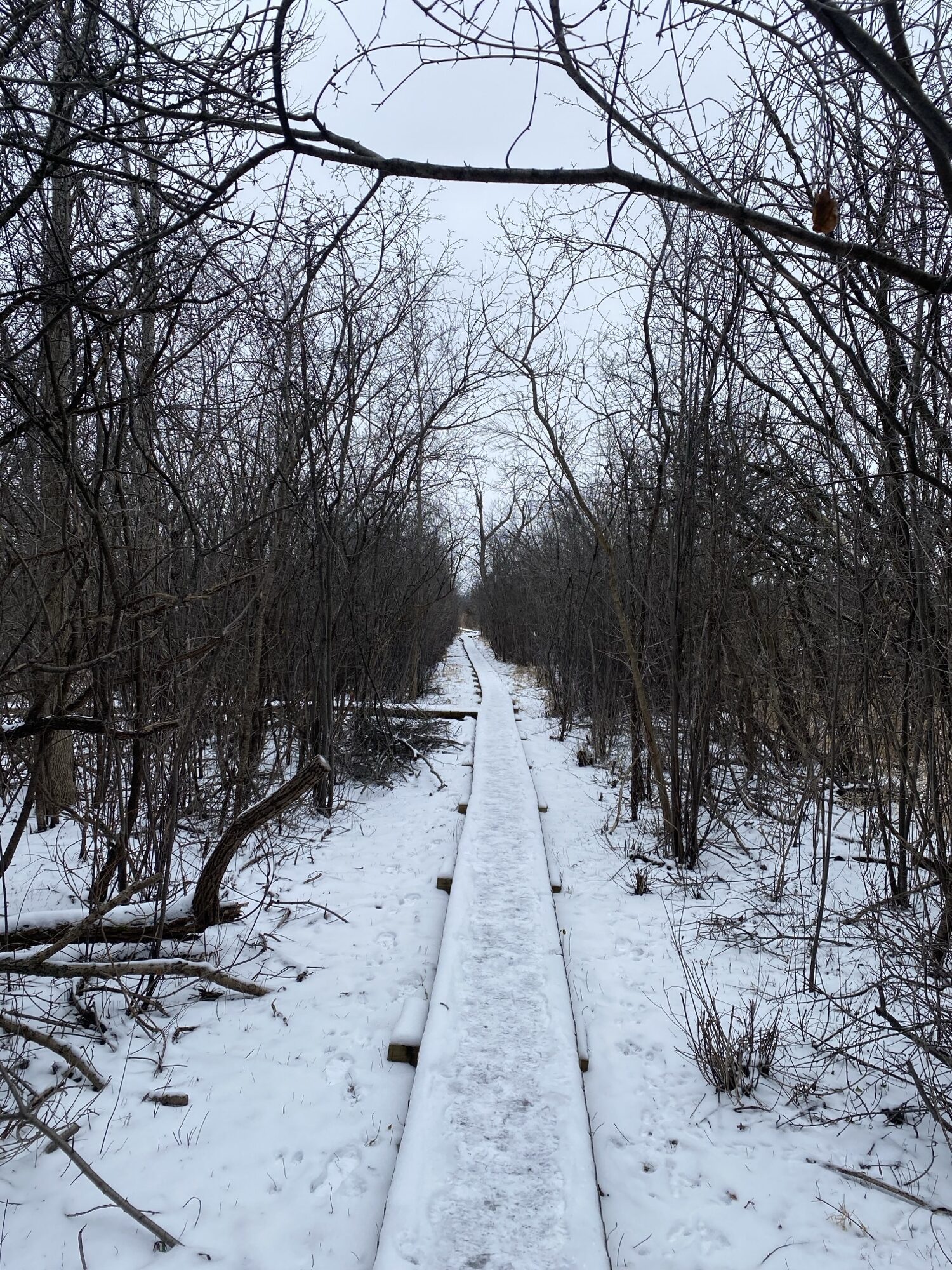
Trees in UW Arboretum
If you’ve opened social media or listened to the news lately, you’ve probably heard about ‘exploding trees’ due to cold temperatures.
A TikTok video from Muskego arborist Jonathan Roberts explains what’s really going on. “When the temperatures drop quicker than normal, the moisture in the sap contracts a lot quicker,” says Roberts. “That can cause a cracking or pop-like sound in the tree.”
Bill McNee is a Forest Health Specialist with the Wisconsin Department of Natural Resources. “Freezing and expansion puts tremendous pressure on the inside of the tree, and if that’s more than the tree can handle, that pressure gets relieved through formation of a frost crack,” McNee says.
And McNee adds that cracking can occasionally be loud. “It might be a small crack and there’s no sound, or it might be a very large noticeable crack in the tree or a larger branch. And these can often give off a very large cracking sound that resembles a gunshot.”
Certain tree species are more likely to experience frost cracking, according to McNee. “Maple trees are generally the most susceptible, but they can occur in any other hardwood tree that loses its leaves in the fall. Or if the conditions are right, it could happen in a conifer such as a pine tree or a spruce tree.”
McNee says some frost cracks may be severe, so have an arborist look at the tree to determine if it’s a safety hazard.
Audio credit Fox 6 Milwaukee, WTAQ Green Bay
Price Transparency for Patients Bill would allow consumers to know some health care costs upfront
WRN’s Bob Hague spoke with state Senator Julian Bradley about legislation (SB 383) which would require providers to let patients see upfront costs for “shopable” services.
The Price Transparency for Patients Bill gets a public hearing before a state Senate committee on Wednesday. Bradley says about 80% of all services handled by hospitals would be captured under this bill. “So, like an MRI or an X-ray blood work, anything that’s essentially a non-emergency service that they need to get done, they can find out ahead of time what the price will be and shop a little bit and try to save some money.”
Bradley notes the idea of price transparency polls extremely well with voters. Most Wisconsin health systems and the Wisconsin Hospital Association have registered against the measure. “The lobbying effort and opposition to this is strong and and I don’t understand it.” The bill will need to pass both chambers of the Legislature before the current session ends this spring.
DHS reiterates recommendations for newborn hepatitis B vaccinations
Despite a change from a federal advisory panel, Wisconsin health officials recommend all newborns should be vaccinated against hepatitis B.
“DHS continues to recommend that all newborns receive the Hepatitis B vaccine within 24 hours of birth, and then go on to complete the standard three dose series within the first 18 months of life,” said Dr. Ryan Westergaard, chief medical officer in the Department of Health Services Bureau of Communicable Diseases. “This recommendation is grounded in decades of research showing that the vaccine is safe and effective, and it aligns with guidance of the American Academy of Pediatrics and other leading medical groups.”
DHS issued the recommendation following a vote by the Advisory Committee on Immunization Practices at the CDC which reversed decades old federal policy. “Since universal newborn vaccination was adopted in the early 1990s, pediatric hepatitis B infections have declined by 99%,” Westergaard said.
DHS has sent a memo to providers, and Westergaard doesn’t expect the current rate of 77% of Wisconsin newborns receiving an initial vaccine dose to decrease. “But it’s important to understand the consequence of not giving the vaccine, which is that even a small number of cases of chronic hepatitis B infection in young people can come with pretty significant healthcare costs.”
A Hepatitis B infection can lead to lifelong liver disease, including cirrhosis and liver cancer, and infants and young children are particularly at high risk. Westergaard said parents who have questions about the vaccine should talk to their pediatrician or family health care provider.
Wisconsin Eye public access channel seeks donations to stay in operation
Reporter Raymond Neupert speaks with Wisconsin Eye CEO John Henkes about the public access channel’s call for donations. You can find out more and donate online at http://www.wiseye.org
Wheel taxes becoming more common in Wisconsin
A new study from Wisconsin Policy Forum shows that by the end of 2025, nearly half of Wisconsinites will be paying a wheel tax to their local municipality or county. Reporter Sean Maloney chats with Communications Director Mark Sommerhauser about the rising number of wheel taxes…
What would a 50 year home loan look like? We ask a Realtor.
Reporter Raymond Neupert discusses the possibility of a 50 year mortgage with David Start of Stark Company Realtors in Madison.
WRN Deep Dive – History and origins of Veterans Day
WRN’s Bob Hague spoke with John Hall at the University of Wisconsin on the origins and history of Veterans Day.
Bob Hague 0:10
Talking with John Hall at UW Madison about the history of Veterans Day. John, you know what? I’m going to start off since we have a visual because I see you’re wearing a red poppy and perhaps explain the significance. Lots of us, of course, have purchased poppies from VFW folks perhaps without really understanding what the significance of that is.
John Hall 0:50
Well, the significance derives from the poem about the casualties at Flanders Fields in the First World War. And so the tradition is actually most strong in Britain and in Commonwealth nations, and those among the listeners who are hockey fans, as I suspect many of them are no doubt watching NHL broadcasts at this time of year will note that the Canadians in particular, and they’re not unique in this regard, generally wear the poppy for an extended period of time, marking not just Armistice Day, but also Remembrance Day and a broader commemoration of all of those who gave their lives in the First World War in particular, but then in subsequent conflicts as well.
Bob Hague 1:34
Obviously the the British Commonwealth nations and and Great Britain herself suffered very extensive casualties compared to America’s relatively brief participation in the First World War.
John Hall 1:48
Yeah, that’s absolutely right. United States joined that conflict in 1917 and did have some early engagement on the Western Front in the calendar year of 1917. But the bulk of its involvement came in 1918, the final year of the war and is my predecessor here at The University of Wisconsin-Madison, the great military historian Edward Mack Kauffman, proclaimed that the United States didn’t necessarily win the war for the Allies, but it was impossible that the the Central Powers would prevail once the US did join.
Bob Hague 2:24
So let’s talk a little bit about the origins of veteran’s day with the earlier Armistice Day. And I think many people who dive into this a little bit are particularly intrigued by the very precise timing at which the Armistice went into effect on the Western Front.
John Hall 2:47
Yeah, and which is exactly why to this day in the United States, it is tradition to observe 2 minutes of silence at a prescribed hour and minute during the day, which is set to 2:11 PM Eastern Time here in the central zone, that’s 1:11 PM. But the idea behind that is the original commemoration was commemorating the precise moment of the Armistice. So 11:11 on 11 in November of 1918 and in commemorations here so that the entire nation across all of its time zones out into the Pacific could commemorate the exact same 2 minutes of silence. That’s why the clock is somewhat shifted, but that those are the the minutes that all Americans are supposed to observe silence.
Bob Hague 3:42
Now, correct me if I’m wrong, but my understanding is that that timing was set by the Allied High Command, who knew in advance that this is when the guns were going to fall silent on the Western Front. Presumably there were casualties sustained on both sides right up until the moment that the Armistice went into effect.
John Hall 4:06
Yeah, there were casualties on both sides right up until that moment. But rumors do spread rather quickly in large military organizations. And so the actual signing of the Armistice was a welcome relief to all of those involved, and I think probably a great many of them weren’t going to believe it until it actually came into effect. And so, you know, poetically, the guns fell silent at exactly that moment. But all the combatants on both sides were essentially fighting up to the whistle without necessarily believing that the tide of the war was going to change in those closing days or hours.
Bob Hague 4:52
So after the Armistice went into effect, eventually the the soldiers serving in the American Expeditionary Force returned to the United States. And I guess it was the following year, 1919, that President Rose, excuse me, President Wilson declared Armistice Day to be a national observance.
John Hall 5:12
Yeah, on that particular day. So the very first observance of Armistice Day in 1919 was a singular event commemorating the end of the war. It was not until 1926 that Congress asked the president to declare a proclamation of recognition of Armistice Day on a recurring basis. And that was sort of already something that many localities were doing. And then it wasn’t until 1938 that it actually became a federal holiday. But by that point, I think there were as many as 27 states that had already recognized Armistice Day as a state holiday.
Bob Hague 5:56
Obviously shortly after that the US entered World War 2 and it was after the conclusion of that conflict, I guess a couple of years later that I guess the movement sort of became born to recognize all veterans on this date.
John Hall 6:14
Yeah, that’s exactly right. So you had in the wake of World War 2 and then the Korean War. So it was actually in 1954 that the law establishing that Armistice Day as a national holiday was a renamed Veteran’s Day and repurposed so that it would honor the veterans of all of America’s conflicts and services in general, which is perhaps not surprising because as many as 16% of the US population had served in uniform during World War 2. And then, you know, you add to that what people had served in in the Korean War and so the veterans of the the great Crusade that was the Second World War and of the first hot engagement in the Cold War, they kind of had an attitude. What about us, right? You know that we’re thinking our World War One veterans. We now have also contributed to this and that resonated very well. Well, and so Congress responded to that. And President Eisenhower is the one who signed that into law, establishing the modern day federal holiday of Veteran’s Day.
Bob Hague 7:23
I guess in closing, John, I want to circle back to, I guess the significance of Armistice Day and America’s contribution to that first global conflict. And it’s it’s so often we, I guess we forget about that. We forget about Korea, but you know the the conflicts that perhaps are not um part of our national historic memory to the extent that the Second World War is, what sort of lessons do you think we can glean from America’s involvement in World War One?
John Hall 7:56
Well, I tell my students that we don’t really fully appreciate this conflict for the reasons that we addressed earlier, right? the United States joined late. Its contributions in terms of its toll of blood and casualties and national treasure pale in comparison to the other combatant nations. And the legacy of that war was largely overwhelmed then afterward by the global influenza pandemic and then subsequently by the Great Depression. So that by the 1930s, Americans had actually soured on their contribution to this war and largely regretted having gone to this war. There are actually congressional hearings. To figure out who was to blame for misleading the nation into the war. And it made Americans very reluctant to prepare for World War 2, even as Nazi Germany was rearming in plain view. And so I suppose the lesson I would derive from all of this is that, you know, history moves in sort of moves sideways, right? Societies learn overarching lessons from the recent past, and sometimes those lessons are never again. And that was the big lesson that Americans learned from World War One. But another one of the lessons is, although this is a lowercase R Republic, a representative government in which the burden of self-defense is supposed to fall on the citizenry at large. It’s a recognition that that burden must necessarily fall disproportionately on but a sliver of that population. And so Veterans Day to this day, I think, is a little bit less of a nationalistic, jingoistic kind of commemoration like Memorial Day, right? Which also commemorates the fallen of American war, America’s wars. These are days in which we don’t celebrate America’s great martial accomplishments. These are days in which we reflect upon service and sacrifice and those reflections may depending upon the moment, make the nation more or less willing to prepare for the common defense in the years to come.
Bob Hague 10:05
Well said. John Hall at UW Madison. Thank you so much for taking the time this afternoon. I really appreciate it.
Feeding Wisconsin preparing for loss of federal Foodshare funding
The federal SNAP or Supplemental Nutrition Assistance Program helps individuals and families buy food. It aids 700,000 people in Wisconsin, including 300,000 children, and is known here as Foodshare. Wisconsin’s Department of Health Services administers some $114 million in federal funding through the USDA, which will be unavailable in November if the government shutdown continues. WRN’s Bob Hague spoke with Feeding Wisconsin Executive Director Jackie Anderson about what that will mean for Wisconsin’s food banks and food shelve, as well as what Foodshare recipients need to know, and how to help.
End Domestic Abuse Wisconsin releases its annual homicide report
Reporter Sean Maloney talks with End Domestic Abuse Wisconsin Executive Director Monique Minkens about the organization’s annual domestic violence homicide report.
Assembly debates resolution to honor Charlie Kirk
Some of Wisconsin’s youngest lawmakers spoke as the state Assembly on Tuesday considered a resolution honoring the life and legacy of slain conservative activist Charlie Kirk. Milwaukee Democrat Kalen Haywood questioned Kirk’s relevance to Wisconsin. “Charlie Kirk, who was not a Wisconsin art, nor had any meaningful ties to our great state or any contributions to our state. And yeah you are using his name and his death to score political points.”
Hustisford Republican William Penterman. “Charlie Kirk was at UW Madison campus last October. His impact has been felt here in this state and will continue to be. Charlie Kirk was vocal about his faith, and as a Christian he loved everyone, especially those he disagreed with.”
The resolution was approved on a mostly party line vote on what would have been Kirk’s 32nd birthday.
State Rep Snyder on another attempt to pass a medical marijuana bill
Reporter Raymond Neupert talks with State Representative Pat Snyder from Wausau who is taking another attempt at passing a medical marijuana bill.
WI AG Kaul discusses a ruling blocking the Trump Administration for accessing sensitive information on SNAP recipients
Reporter Raymond Neupert talks with Wisconsin Attorney General Josh Kaul about a recent ruling blocking the Trump Administration from accessing state-based information on food benefit recipients.
“Fight the Bite” to avoid West Nile Virus
The Wisconsin Department of Health Services tracks human cases of West Nile Virus. Following confirmation of a case in Dunn County, WRDN’s Brian Winnekins spoke with Dunn County Health Department Director KT Gallagher on how you can keep your family safe.
Lawsuit against City of Madison over failure to count ballots cast in November 2024 election
Non-profit law firm Law Forward filed a class action lawsuit in Dane County Circuit Court against the City of Madison, seeking damages for 193 voters whose votes went uncounted in the November 2024 presidential election. Bob Hague reports:
Focus on school zone safety
With students across Wisconsin back in class, it’s time to focus on school zone safety. WRN’s Bob Hague spoke with Waunakee Police Lt. Matt Plendl about what drivers, parents and 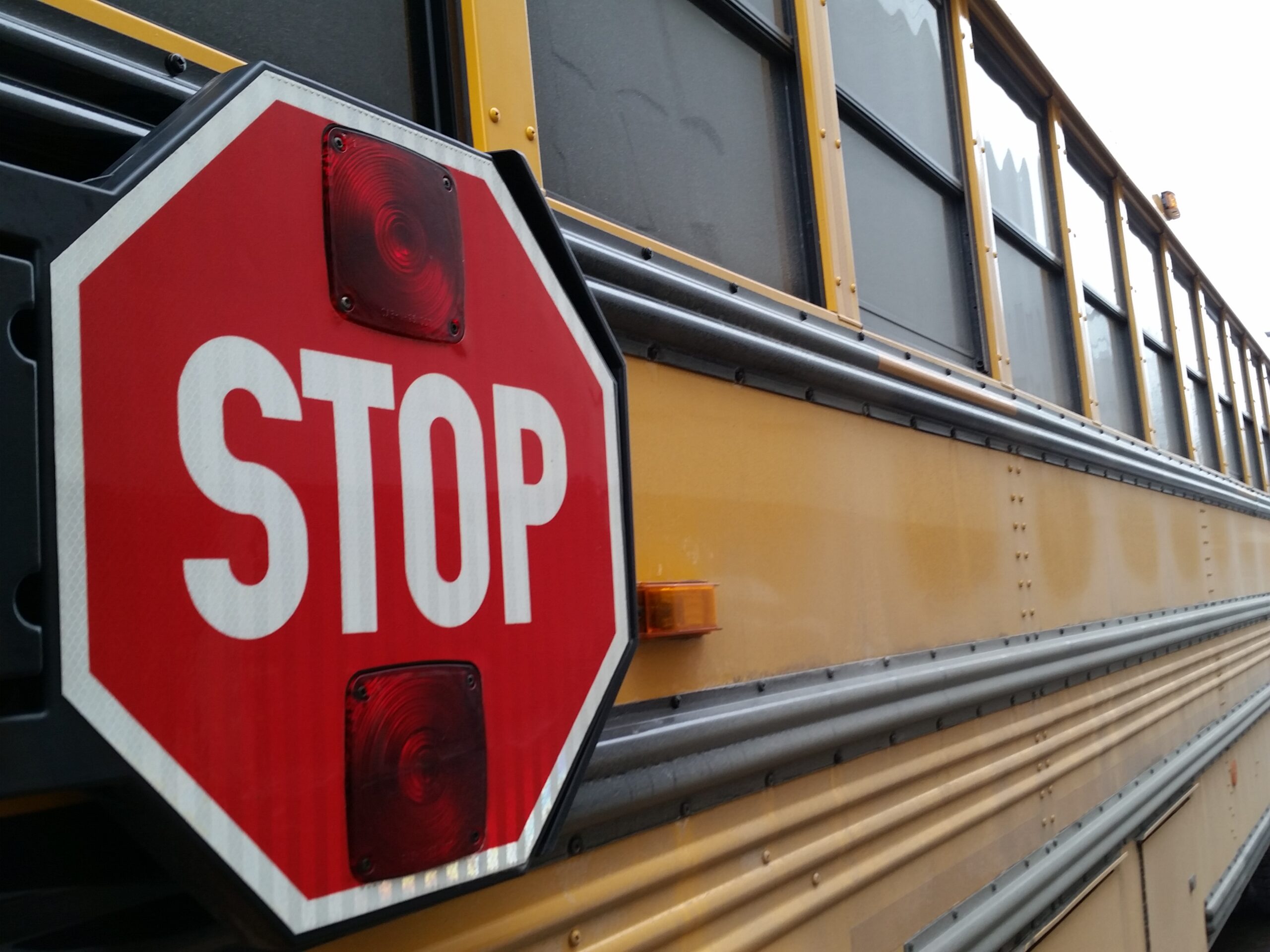 students need to keep in mind to keep everyone safe. Plendl is part of the Dane County Traffic Safety Commission.
In the last two years, Dane County experienced an increase in the number of children aged 5-18 injured while walking or biking to or from school compared to the previous year. In 2024, there were 15 injured and in 2023 there were 13, compared to 4 injured in 2022.This has prompted Dane County law enforcement agencies to collectively increase surveillance in school zones as children head back to school. Plendl said similar issues are being seen in communities across Wisconsin.
What to know about raw milk following illness outbreak in Florida
A recent illness outbreak in Florida puts raw milk back in the spotlight. Adam Brock, Administrator for the Division of Food and Recreational Safety at DATCP explained that sales of unpasteurized milk are illegal in Wisconsin.
“Simply put, the sale of raw milk and raw milk dairy products is illegal in Wisconsin. That being said, like with everything, there are some incidental exceptions to the rule,” Brock said.
Bob Hague interview w/DATCP’s Adam Brock:
Brock said the agency works to educate producers on the regulations prohibiting raw milk sales, and consumers on the risks associated with its consumption. “We just ask that you educate yourself and realize that it is not risk free or low risk,” he advised.
A Florida dairy farm has been linked to an outbreak of infections. Six children under 10 years old were among the more than 20 victims. Seven people have been hospitalized, with two developing severe complications.
New D-Day exhibit now open at the State Veterans Museum in Madison
Reporter Raymond Neupert talks with State Veterans Museum Director Chris Kolakowski about the newly opened exhibit on Wisconsinites who fought and died on D-Day during the invasion of Normandy.
“Adopt, Don’t Shop” this summer when you’re looking for a dog says the Wisconsin Humane Society
Reporter Raymond Neupert talks with Angela Speed from the Wisconsin Humane Society about summer dog adoption.
How to prevent scams against elder relatives, with help from the Better Business Bureau
Reporter Raymond Neupert talks with Lisa Schiller with the Better Business Bureau of Wisconsin on how you can help elderly relatives spot and be ready for scams.
WISDEMS Convention in The Dells this weekend
Wisconsin Democrats gather for their annual state party convention in the Dells this weekend. Bob Hague previews what to expect with UW La Crosse Political Science Professor Anthony Chergosky.
Milwaukee TV station alleges open meetings violation by school district
Milwaukee TV station WTMJ is pursing legal action against the School District of St. Francis over an open meetings law violation. It happened Monday, June 2, when Superintendent Deborah Kerr prevented a reporter and photographer from attending an open board meeting – and threatened to call police. Bob Hague spoke with Bill Lueders, President of the Wisconsin Freedom of Information Council.
Grocers have concerns about federal cuts to SNAP/FoodShare
Wisconsin grocers have concerns about the future of the federally funded FoodShare program, the state’s version of the Supplemental Nutrition Assistance Program The House passed budget reconciliation bill makes deep cuts. Bob Hague spoke with Mike Semmann, President of the Wisconsin Grocers Association.
The Wisconsin Department of Health Services reports FoodShare benefits 700,000 residents. Semmann says that makes it financially viable to keep stores open in some communities
Disability advocates have concerns about Medicaid reforms
Advocates for people with disabilities have concerns about changes to Medicaid Beth Swedeen is Executive Director of the Wisconsin Board for People with Developmental Disabilities. Swedeen says many optional Medicaid programs could be eliminated under the provisions of President Donald Trump’s Big Beautiful Bill Act which was passed by the U.S. House of Representatives. She spoke with WRN’s Bob Hague.